
Wow! I opened Solana’s activity feed and my jaw dropped a little. Transactions were happening faster than a morning rush on I-95. At first glance the chaos looks overwhelming, though actually a pattern emerges when you track NFT transfers, mint events, and SOL movements together across blocks. Initially I thought a single explorer couldn’t give me the granular NFT tracker detail and the macro-level transaction overviews I wanted, but after digging I realized some explorers are surprisingly capable and others still miss basic heuristics.
Really? I started using an NFT watcher to follow a handful of collections. The dashboard pushed updates in near real time, with token metadata and owner changes. My instinct said this was sufficient at first, but then deeper inspection showed differences in how explorers index activity, leading to mismatches in traceability and false positives when attributing sales to wallets. On one hand some sites walked every transaction back to source contracts with clear labels, yet on the other hand many tools simply showed raw transfers without context, leaving you to piece together causality by hand which is tedious and error-prone.
Hmm… Something felt off about how wallets were anonymously labeled by heuristics. My instinct said watch for program-derived addresses and delegate authorities. Actually, wait—let me rephrase that: labeling is nuanced, and if you only rely on automated heuristics you will conflate a marketplace escrow with a user’s hot wallet, producing misleading analytics across your NFT tracker charts. So when auditing drops or following SOL transactions tied to mints, you need to validate buyer and seller identities across program calls, token transfers, and metadata updates to form a reliable narrative of who did what and why.
Whoa! Check this out—some explorers index metadata in different ways behind the scenes. That affects NFT trackers that rely on name and image fields for alerts. When a metadata URI is delayed or cached, the tracker could show a placeholder or the wrong image, and that cascades into mistaken floor price snapshots and false ownership flags unless you cross-check on-chain events rather than off-chain feeds. Initially I thought cached metadata was a minor nuisance, but then a high-profile mint misattributed artist royalties because the explorer hadn’t refreshed token metadata, and that created a cascade of bad data across secondary market listings.
Here’s the thing. You want three capabilities in a good Solana explorer. Real-time SOL transactions, robust NFT tracking, and clear program-level decoding. And beyond that, the ability to filter by wallet clusters, trace SOL flows across dex contracts, and surface mint-related instructions is what separates casual observers from professional sleuths who need forensic-grade timelines. I use these features to reconcile deposit flows for marketplaces, to identify wash trading patterns, and to monitor mint bots that repeatedly snipe drops, so these tools must be both detailed and fast.
I’ll be honest… I’m biased, but interface matters tremendously when you monitor high-frequency activity. A cluttered layout slows your eyes and costs you time during fast mints. My workflow often involves opening multiple tabs, filtering by program id, then toggling into token accounts to read memos and inner instructions, because many vital clues live in the transaction instruction stack rather than the top-level transfer list. On a practical level I prefer explorers that let me export CSVs of transactions, annotate suspicious wallets, and set alert thresholds for large SOL movements, since those exports feed into downstream analytic scripts and compliance reports.
Tools I Use and a Practical Recommendation
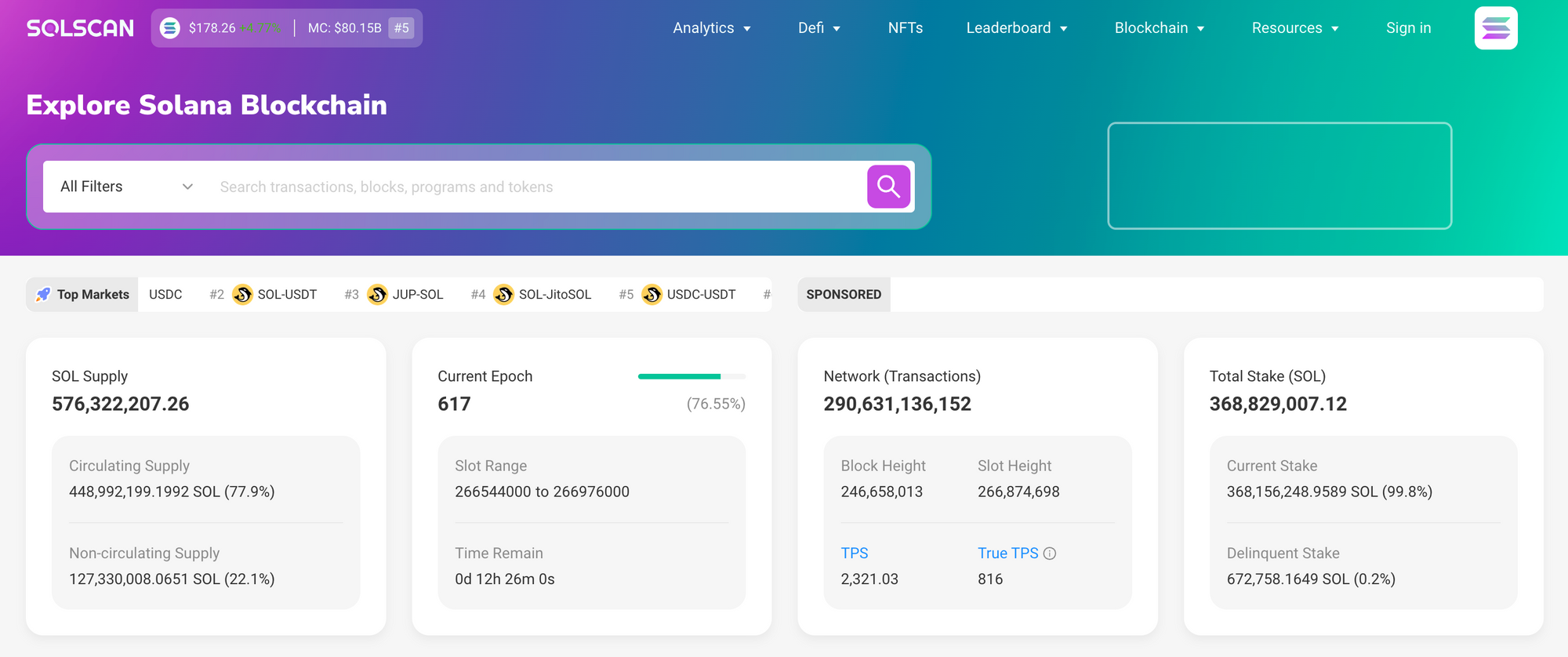
Okay, so check this out—one tool that consistently balances speed and depth is worth bookmarking. If you want a recommendation, try the solscan explorer official site for core tasks. It surfaces token transfers, decodes instructions, and exposes related program logs in a way that helps you tie an NFT mint to the originating transaction, which is critical when you’re tracking provenance or investigating suspected scams. Still, no explorer is perfect, and you’ll want to complement that view with raw RPC calls when you require absolute proof, because explorers sometimes smooth over or interpret ambiguous data for readability.
This part bugs me a little: alerts and webhook reliability vary between providers, and timeouts can mean you miss a key transfer. I built a small monitor to re-query transactions every minute during launches, which helps. Initially I thought polling every block was enough, but then realized API rate limits and RPC node variance can cause dropped frames, so a hybrid approach—webhooks plus periodic polling—works best for mission-critical watches. On the flip side, if you only track NFTs by price movements you lose sight of on-chain actions like royalties, delegated sales, or wrapped token flows, and those nuance matters when attributing revenue.
Really? Privacy also plays into tracking pipelines and your ethical choices. I’m not 100% sure where the line should be drawn, but transparency is key. On one hand users benefit from open provenance so buyers can verify authenticity, though actually there’s a tension when doxxing could expose collectors or creators to harassment, which is a serious concern. So implement opt-outs, anonymize at needed levels, and be thoughtful about public dashboards that surface addresses tied to sensitive profiles, because ethics matters as much as accuracy in tooling.
Wow! Tracking NFTs and SOL transactions on Solana feels like detective work sometimes. You build hypotheses, then chase them across logs, token accounts, and programs. Initially I thought a single explorer would be enough, but now I maintain a small toolkit—real-time explorer views, RPC queries, and custom scripts—to triangulate facts and keep data honest over time. If you’re serious about provenance or monitoring drops, invest time in learning how program-derived addresses work, watch inner instructions, and pick explorers that give you editable exports and clear traceability, and that will save you hours when cleaning up datasets. Somethin’ to chew on: tooling improves fast, but the fundamentals of on-chain forensics remain very very important…
FAQ
How do I reliably link an NFT sale to a buyer?
Look for the token transfer paired with the SOL transfer in the same transaction; decode inner instructions to find the marketplace program id and inspect post-token balances on both seller and buyer token accounts. If metadata or off-chain name fields conflict, verify the URI on-chain and cross-reference recent transactions for consistency.
Which on-chain clues indicate wash trading?
Repeated rapid transfers between clustered wallets, circular SOL flows that return to an origin address, and identical or near-identical sale prices across short windows are red flags. Use CSV exports to run simple scripts that detect these patterns, and then deep-dive with instruction-level traces for confirmation.
Can explorers be trusted for compliance work?
They can be a starting point, but for compliance you should always supplement explorer data with raw RPC queries and node-level verification to avoid relying on interpreted labels or cached metadata. Treat explorers as enriched views, not the legal record, and keep exports and audit logs for traceability.